


 Dannette Hunnel
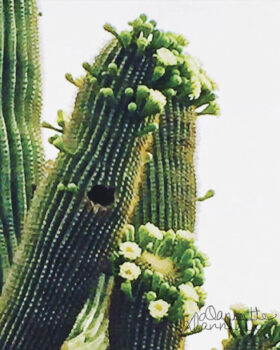
The last week of April gave us the pleasure of observing the blooms of the saguaro cactus. It’s only for a short time frame but it is beautiful to see. People are amazed when they see the blooms for the first time, but saddened to see that the rubbery, white blooms last only for a day. First time viewers flood social media with the rare site.
The saguaro is Arizona’s state flower. It stands as the worldwide symbol of our great state 48. Now is the second best time to plant saguaros. If you do, remember a few keys rules:
Do NOT water for four weeks and plant facing the same direction it was originally growing so it doesn’t get sunburned. Yes, it’s true, they do sunburn those first few days, just like us!
Saguaros make a statement in any yard, regardless of the style of home. You’ll find they become a “part of the family”, as this statuesque companion is part of your landscape for generations.
Removing a large, healthy saguaro is a major undertaking due to their immense weight and legal protections. Be sure you want this commitment before you invest and plant your saguaro.
Facts about our wild west symbol:
First, pronunciation: the “go” is silent, sounding like a “wh”. It’s said “Sah-WHAR-O, a word originating from Indigenous peoples of the Sonoran Desert, meaning “giant tree-like cactus” Saguaros are all over the Sonoran Desert, (Arizona, southeastern California, north Western Mexico). Most begin growing arms and blooming between 35-60 years of age or when they reach seven feet tall. The more arms they have, the more water they store. Birds rely heavily on saguaros. You’ll often see small holes where birds nest for safety, shelter and hydration.
Saguaros can live to be 150 to 200 years old, and grow 40-60 feet tall. If consistently hydrated, they can weigh up to 4,000 pounds.
Historically, when a saguaro died, its woody ribs were used to build furniture, roofs and fences. The spines are now often encased in tubes with pebbles to create rain sticks—a popular Arizona souvenir.
Permits are a must to transport a Saguaro for any reason.
It is illegal to tear down or destroy a saguaro on federal land in Arizona.
The blooms we see in April appear in dense clusters atop the arms and crown. They open at night and remain visible for approximately 24 hours. With a rubbery texture and scent of “over ripe” melons, they attract pollinators—bees and birds like the white-winged dove during the day, and the long-nosed and the Mexican long-tongued bat at night. By summer, red fruit blooms and splits open showing juicy red pulp with up 2000 small black seeds. The fruits can be made into syrup for jam, or wine, with a flavor similar to plum. The seeds can be dried, and used for chicken feed.
It’s a delight to wake–up to the saguaro blooms each year, if only for a day. It’s worth the wait.