
 Danette Hunnel
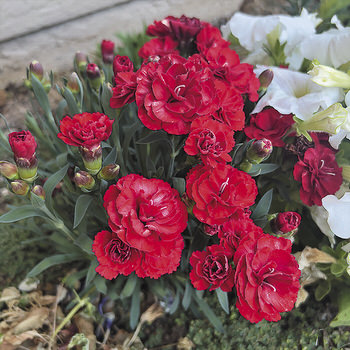
People come into our Valley and think it’s impossible to plant anything in January. But that’s not true. Carnations are lovely perennials that like cool temps, as long as they have constant sun. They can thrive year round with adequate water, a bit of fertilizer, and a shade cloth or screen during our extreme summers.
An inexpensive small, green plant with either white, pink, or red buds is excellent planted in the ground. Just cover from the January frost (below 32 degrees). It’s best to use a starter plant rather than seeds at this time of year. Water lightly for only the first five days. A mature plant will grow between 1.3 feet to 3 feet tall and spread from 6 inches to 1 foot. After established, they need full sun and require water only about every 10 days until mid-February. No need to fertilize until February if using liquid, and then only once a month until the heat begins in May. Then it should be every three weeks through November. If using a slow-release fertilizer, it’s only necessary to fertilize once a year, and apply in early April. Place the fertilizer around the base of the plant only, avoiding leaves and stems. Fertilizer should be the N-P-K (nitrogen/phosphorus/potassium) based.
Pruning is simply clipping yellow, withered leaves to increase ventilation and reduce infection. Pop off any shriveled flowers, too. Although not absolutely necessary, watering at night is a good idea, as the cooler evenings allow the plant to take up water and maintain the moisture longer before the daily sun begins to dry the soil. Check the soil where carnations live approximately every two years. It should be well draining, so mix sand or gravel into it.
Use caution with pets, as carnations can be toxic for animals. I like carnations because they are long-flowering, repeat bloomers, pleasant to look at, and fairly disease resistant. Lastly, one can clip the flowers at the bottom of their stems and place in a vase indoors. They make lovely table-top arrangements.