


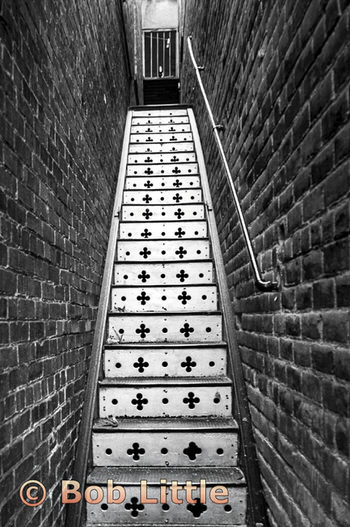
“No Exit” by Bob Little
Ken Duquaine
Early on in my photographic journey I had the opportunity to take some classes with and have my work critiqued by Bryan Peterson. Bryan is a photographer, author, and educator who gained well-deserved notoriety with his book Understanding Exposure. When asked the question, “When should you take a vertical shot?” his answer was always, “Right after the horizontal one.”
While this might sound a bit simplistic, both the question and answer have validity. The fact is that in too many cases the decision made depends not on an artistic choice between the two orientations based on the subject matter, but on whether a person is using a camera or a cell phone. Most camera users take a majority of horizontal or landscape photos while most casual cell phone shooters take vertical photos. The reason is pretty simple and lies with the design of each. Cameras are designed for horizontal use, and cell phones are designed to be held upright.
A recent study determined that 93% of cell phone photos were shot vertically, while a casual survey of my own percentages with a camera showed 85% shot horizontally. Ultimately, the choice should not be determined by convenience or design but rather what the subject calls for to enable you to tell your story. The terms landscape and portrait when applied to these orientations are not done so by accident. Landscape or horizontal format lends itself to broad, sweeping, dramatic images that emphasize openness and give the subject room to breathe. Vertical format emphasizes height and intimacy and reinforces the shape of the human body and vertical structures such as waterfalls and monuments.
In the end, it really comes down to matching your orientation to the subject at hand rather than relying on habit or convenience. Creatively breaking the rules when making these decisions can certainly lead to interesting and thought-provoking compositions. But for the most part the type of subject, your artistic interpretation of that subject, and the elements you need to arrange effectively for your composition should govern which orientation you choose to use.
One of the best ways to learn more about how to make that final decision on horizontal vs. vertical is contained in Bryan Peterson’s answer. Take both and compare them.
The East Valley Photo Club meets on the second and fourth Thursdays from 6:30 to 8:30 p.m. in the Navajo Room of Sun Lakes Country Club from October through April. For more information about the EVPC and its activities call EVPC President Raul Lopez at 408–209-3114, or email rslopez19@comcast.net, or Past President Ken Duquaine at 248–342-0790 or email kduquaine@hotmail.com, and visit our website at eastvalleyphotoclub.com.